
Journal
Computer Vision in Agriculture: Closing the AI Trust Gap
Farms using computer vision are cutting costs by 40–60% and hitting ROI in 2–3 years. The lesson isn't about farming - it's about what real AI integration actually looks like.
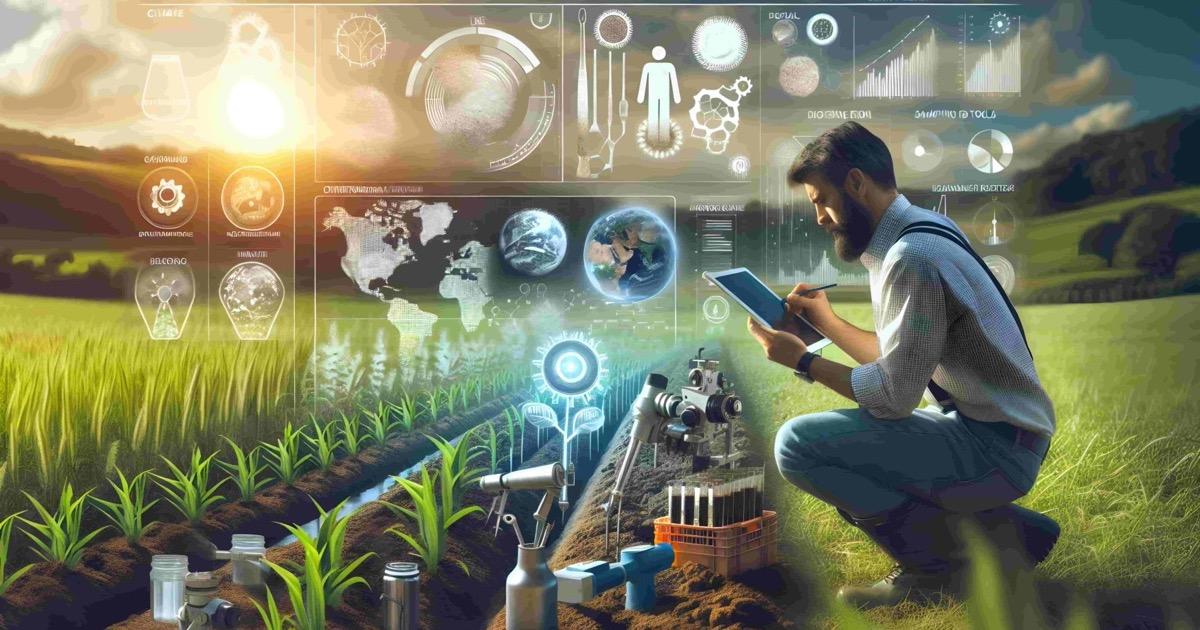
A vineyard owner in Europe; ten hectares, nothing huge; took three years before she trusted a computer vision system enough to let it make actual harvest calls. Three years. Not because the tech didn't work. It worked fine from day one. The holdup was the difference between "this thing functions" and "I'm willing to let it run the show."
That gap is basically the whole story of AI adoption right now, whether you're talking about farms or corporate boardrooms. Plenty of people have bought the sensors, signed up for the subscriptions, and run the pilot program. Far fewer have actually handed the technology the keys. Agriculture just happens to be where you can see that gap most clearly, with real numbers attached; which makes it a genuinely useful case study for anyone thinking about AI strategy, in any industry at all.
So let's get into what's actually happening in the field, what the data says, and what agriculture's slow, hard-won path to trust can teach the rest of us who are still stuck in pilot-mode purgatory.
The Problem Hiding in Plain Sight
Harvesting has always been agriculture's most stubborn bottleneck. Fruit ripens on its own timeline; it doesn't care about your schedule. Labor is thin on the ground; the average farmer worldwide is pushing 60, and there's no wave of younger workers waiting to step in. Miss the ripeness window by a day or two and you're either leaving money on the vine or shipping products that won't survive the trip.
For decades the answer was "throw more people and more hours at it." That's expensive, and it doesn't scale. It's the agricultural version of burning forty engineering hours on something a properly built system could handle in one.
What Computer Vision Actually Does Out There
Strip away the buzzwords and computer vision in agriculture comes down to this: teaching cameras; bolted onto drones, tractors, robotic arms, even handheld scanners; to see the way a seasoned agronomist sees, just faster, more consistently, and without ever needing a coffee break.
In practice, that looks like:
- Ripeness detection at the individual fruit level. Vision systems read color, size, and firmness to figure out exactly which apples, berries, or grapes are ready; not the row as a whole, the individual piece.
- Autonomous harvesting arms that can tell a ripe strawberry apart from a leaf, a stem, or its unripe neighbor, then pick it without bruising it.
- Yield estimation before anything's been cut, so operations teams can plan labor, storage, and logistics off real numbers instead of last year's spreadsheet.
- Defect and quality sorting on the line, catching bruising, disease, or blemishes faster than any human inspection crew could keep up with.
None of this is speculative anymore. It's a product you can buy today.

The Numbers Are the Real Hook Here
If hard figures are what convince you, agriculture has plenty. The computer vision market for agriculture alone is expected to more than quadruple; from roughly $2.5 billion in 2026 to somewhere near $10.8 billion by 2034, a compound annual growth rate close to 20%. Zoom out to AI in agriculture more broadly and the curve is just as steep, tracking a 24-25% CAGR through the end of the decade.
The operational numbers are just as telling. Farms running computer vision-guided precision applications are seeing pesticide and herbicide costs drop 40-60% without giving up any crop protection. Precision irrigation tied to computer vision is cutting water use by 25-35%. Automating crop scouting and field monitoring is saving 20-40% on labor costs at larger operations, with most farms seeing full ROI within two to three years.
That's not a rounding-error improvement. That's the gap between a purchase that gathers dust in a shed and one that reshapes how the whole operation runs.
Why This Matters Well Beyond the Farm
Here's the part worth sitting with if you're the one signing off on AI spend for an engineering org rather than a vineyard.
Agriculture didn't earn these returns by buying a tool and crossing its fingers. The road there wasn't smooth; implementation costs are real, you need people who know how to run the systems, and field conditions are unpredictable in ways a lab never is. But the operations pulling ahead are the ones that got past the pilot stage and actually let computer vision sit inside the decision loop: triggering the harvest, routing labor, adjusting the spray in real time; not just spitting out a dashboard someone glances at once a week and forgets.
That's more or less the exact fork in the road most mid-market and enterprise tech organizations are standing at today. Something like 80-90% of companies have adopted some form of AI. Most of those are still running shallow experiments; tools purchased, boxes checked, the underlying workflow barely touched. The companies actually compounding value are treating AI the way the best agri-tech operators treat computer vision: not as a bolt-on feature, but as the thing that redesigns the workflow itself.
That forty-hours-down-to-one-hour shift isn't hypothetical. It's the same curve precision harvesting has already proven out, just in a completely different field. If cameras and models can be trusted to pick a strawberry at exactly the right second, then the real barrier to trusting AI inside your own engineering pipeline was never about capability. It was about how seriously anyone took the integration.

Where the Bottleneck Really Sits
The thing holding agriculture back was never the algorithms; it's trust, integration effort, and change management. Sound familiar? Swap "vineyard owner" for "engineering leadership team" and the story barely shifts. The technology tends to be ready long before the organization is willing to hand it real decisions.
Closing that gap faster than the competition is, honestly, the whole advantage on the table right now.
Your Next Move
Precision harvesting didn't get faster because someone bought a camera. It got faster because someone rebuilt the workflow around what that camera could actually see and do; end to end, decision to action.
The same logic holds whether you're optimizing a harvest or a software delivery pipeline. Buying the tool was never the finish line. Integrating it deeply enough that it changes the shape of the work; that's where the value actually lives.
If your organization has the subscriptions but not the transformation, that's the gap worth closing next. Don't just check the AI box. Rebuild around it.
Ready to find out where your organization's own trust gap is hiding; and what it would take to close it?